
Detecting High-Risk Taxpayers Using Data Mining Techniques

More Screenshots





Project Description & Abstract
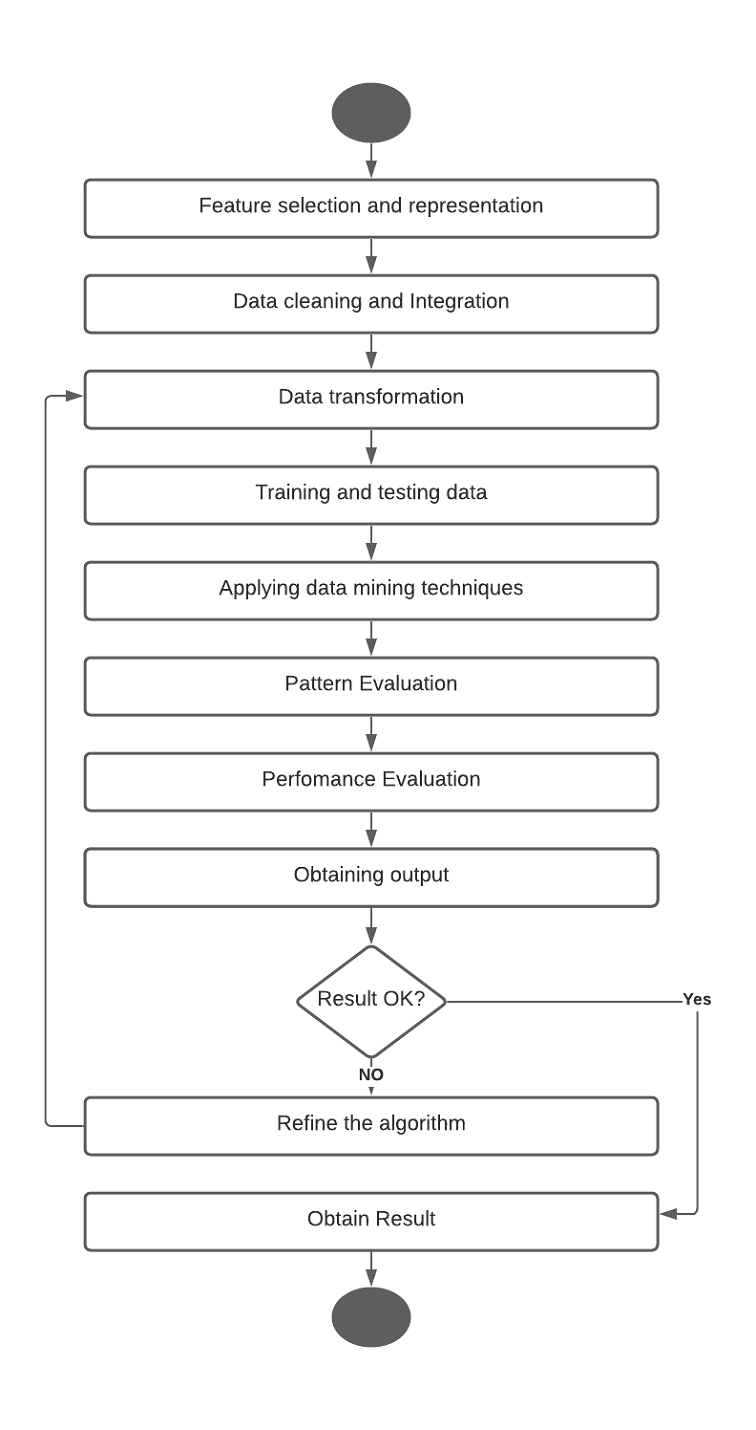
Detecting High-Risk Taxpayers Using Data Mining Techniques is an intelligent tax risk assessment system designed to help tax authorities identify taxpayers who may require further review or audit based on historical financial and tax-related patterns. The system applies data mining, machine learning, statistical analysis, classification, regression, and anomaly detection techniques to analyze historical taxpayer information. It examines factors such as taxable income, reported income, purchasing and sales information, revenue, profit, previous tax assessments, amendments, and changes in financial behavior. The system analyzes historical records to identify unusual variations, deviations, outliers, and suspicious financial patterns. Statistical techniques such as mean, variance, and standard deviation can be used to identify significant deviations from expected taxpayer behavior. Regression analysis is also used to forecast future taxable income and compare predicted values with actual reported or assessed amounts. Machine learning techniques such as Support Vector Machine (SVM), classification algorithms, and artificial neural networks can be incorporated to improve risk classification. Taxpayers can then be grouped into different risk levels based on the combined results of multiple analytical approaches. The system is intended as a decision-support tool for authorized tax professionals, helping them prioritize cases that may require additional examination. Instead of relying entirely on manual analysis, the system provides data-driven risk indicators and forecasting results that can support more efficient tax assessment and audit processes. A combined or colorful risk assessment approach integrates multiple risk indicators, including volatility-based risk, amendment-based risk, income-based risk, regression-based risk, and classification-based risk. The combined score can be used to prioritize taxpayers according to their relative risk level. Tags : High Risk Taxpayer Detection, Tax Fraud Detection, Tax Evasion Detection, Data Mining, Machine Learning, Tax Risk Assessment, Financial Fraud Detection, Anomaly Detection, Predictive Analytics, SVM, Support Vector Machine, Regression Analysis, Data Analysis, Python, Flask, MySQL, Scikit-learn, Pandas, Tax Assessment, Risk Prediction
Core Deliverables
Career & Learning Outcomes
By deploying and presenting this system, students will master:
- Integrating backend frameworks with local and cloud databases.
- Configuring secure JWT cookies/tokens and user credential encryption algorithms.
- Formatting model dependencies using requirements variables.
- Presenting design and code structures confidently to review boards.